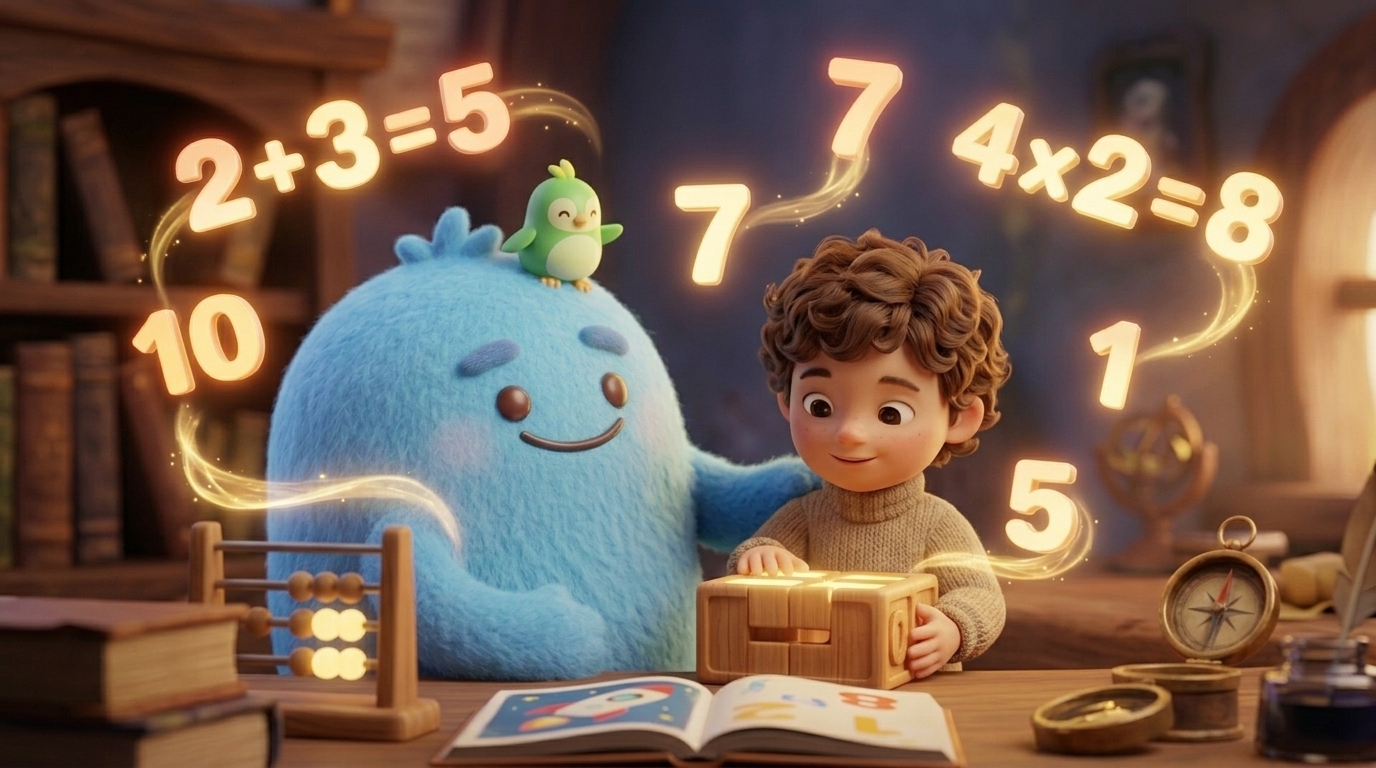
Understanding Developmental Dyscalculia
Dyscalculia is a specific difficulty in learning mathematics. Difficulty with counting does not imply laziness or low intelligence. There may be different reasons for it; assessment needs to consider the child's age, experiences and needs.
Math Difficulties: What to Observe
Some difficulties may be a reason to look more closely at a child's developing math skills. These examples are not a diagnostic checklist and do not confirm dyscalculia:
- Difficulty comparing quantities (more vs less).
- Difficulty remembering the sequence of number words.
- Anxiety or withdrawal during math activities.
- Difficulty recognizing small quantities without counting each object.
How to Help:
Use CPA (Concrete – Pictorial – Abstract): move from physical objects through pictures to symbolic notation, returning to objects when helpful. Reduce time pressure: strong stress can make focusing and completing tasks harder. Appreciate attempts and explore mistakes together. Number Land can offer practice in related skills; choose tasks suited to your child.
This article is educational and does not replace a specialist assessment. If your child's difficulties are persistent or pronounced, consider consulting a psychologist, an educational specialist or an educational psychology service.
For practical responses during everyday tasks, read responding to maths mistakes.